
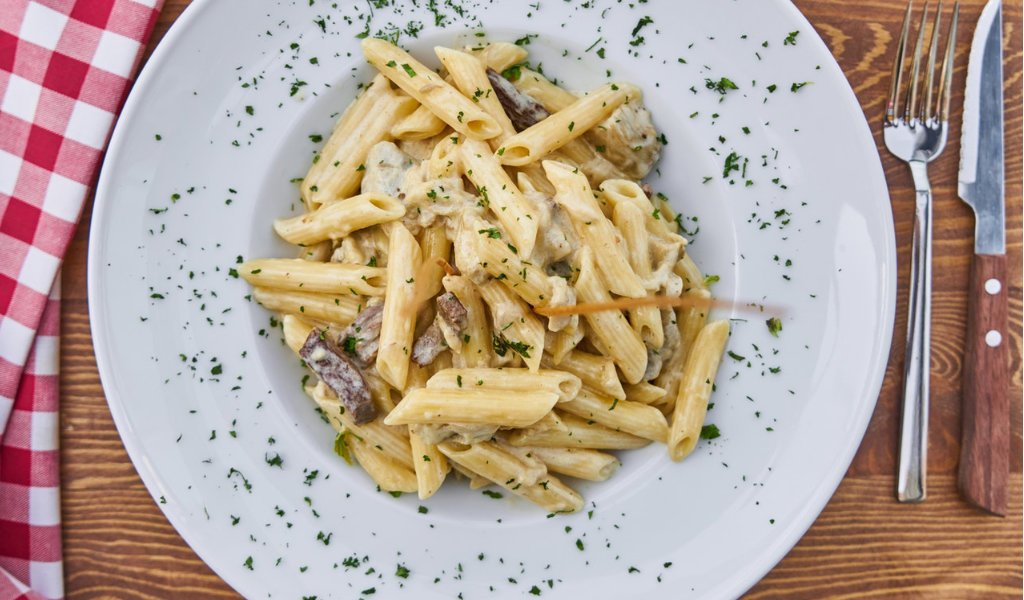
Tasty pasta forms when good texture, balanced sauce, and well-chosen ingredients work together. You taste better depth when pasta holds its shape, sauce sticks properly, and flavors stay stable during cooking.
What Defines “Tasty Pasta” in Cooking?
Tasty pasta is pasta that shows steady texture, clear flavor, and strong sauce grip. Pasta shape connects with sauce density, and ingredients add layers of umami and aroma.
Core determinants
- Texture shapes mouthfeel
- Starch binds sauce
- Fat softens acids
- Salt boosts flavor compounds
Example flavor metrics
| Attribute | Optimal Value | Effect |
|———-|—————-|——–|
| Pasta salinity | 1–1.2% salt per water weight | Stronger flavor diffusion |
| Sauce viscosity | 1.4–1.6 Pa·s | Better cling |
| Pasta firmness | 70–75% hydration retention | Defined chew |
Next, you read how texture changes taste.
How Does Pasta Texture Influence Taste?
Pasta texture influences taste because firm pasta makes you chew longer, which increases flavor detection. A strong gluten network protects the surface and holds sauce better.
Texture factors
- Dry pasta forms tight gluten bonds
- Fresh pasta offers softer bite
- Bronze-cut pasta holds sauce in tiny grooves
Examples - Rigatoni grips thick sauces
- Tagliatelle spreads creamy sauces smoothly
Next, you see how sauce affects flavor.
Which Sauces Produce the Tastiest Pasta?
Sauces taste best when fat, acid, and umami stay balanced. A balanced sauce forms a stable coating that sticks to pasta.
Primary sauce categories
- Tomato sauces
- Tomato adds glutamates
- Olive oil softens acids
- Garlic adds aroma
- Cream sauces
- Milk fat thickens texture
- Parmesan adds aged umami
- Pepper adds heat
- Oil-based sauces
- Olive oil carries herbs
- Pine nuts add richness
- Basil adds fresh aromatics
Next, you see which ingredients boost flavor most.
Which Ingredients Increase the Taste of Pasta Most?
Ingredients increase taste when they raise umami levels, add fat depth, or release strong aromatics.
High-impact ingredients
- Parmesan supplies concentrated umami
- Anchovies add nucleotides that raise umami strength
- Garlic releases strong aroma compounds
- Fresh herbs bring volatile oils
- Olive oil carries fat-soluble flavors
Example synergy - Parmesan + tomato boosts umami levels
- Basil + olive oil improves herb freshness
Next, you move to cooking methods.
Which Techniques Make Pasta Taste Better?
Techniques improve taste when they control water, starch release, and sauce bonding.
Key techniques
- Salt water at 1–1.2%
- Finish pasta in sauce for 60–90 seconds
- Add 50–100 ml starch water to help emulsify
- Use heat to join starch and fat
Strong semantic triples - Heat tightens proteins.
- Starch supports sauce.
- Salt strengthens flavor.
Next, you learn how shapes influence flavor.
Which Pasta Shapes Create the Tastiest Results?
Shapes create tastier results when their design matches sauce thickness.
Shape–sauce pairs
| Shape | Ideal Sauce | Reason |
|---|---|---|
| Penne rigate | Chunky sauces | Ridges trap solids |
| Spaghetti | Oil-based sauces | Surface spreads oil |
| Fettuccine | Cream sauces | Wide shape holds fat |
| Orecchiette | Vegetable sauces | Cup shape holds bits |
| Next, you see how to build a complete dish. |
How Do You Build a Tasty Pasta Dish Step-by-Step?
You build a tasty dish by balancing salt, starch, fat, and acid.
Step sequence
- Salt the water at 1–1.2%.
- Cook pasta until firm.
- Prepare sauce separately.
- Move pasta into sauce.
- Add starch water.
- Add cheese or herbs off heat.
Next, you get recipe examples.
What Are Examples of Scientifically Tasty Pasta Recipes?
These recipes use measured ratios of fat, acid, and umami to strengthen flavor.
Examples
- Cacio e Pepe
- Pecorino provides strong umami
- Starch water forms a smooth coating
- Tomato Basil Pasta
- Tomatoes offer 140–250 mg glutamates per 100g
- Basil releases eugenol for fresh aroma
- Pesto Pasta
- Pine nuts provide dense fat
- Parmesan adds layered umami
Next, you learn which mistakes weaken taste.
What Mistakes Reduce the Taste of Pasta Most?
Taste drops when techniques break emulsions, weaken seasoning, or soften structure.
Common errors
- Rinsing pasta removes starch
- Adding too little salt weakens flavor
- Overcooking breaks gluten
- Heating cheese too much causes clumps
Next, you see quick improvement methods.
How Can You Make Any Pasta Taste Better Quickly?
Any pasta becomes tastier when you add acid, fat, herbs, or umami enhancers.
Quick boosters
- Add lemon zest for brightness
- Add olive oil for depth
- Add Parmesan for umami
- Add chili flakes for heat
40-word snippet
Tasty pasta forms when firm texture, balanced sauce, and umami-rich ingredients interact correctly. Salted water, starch-emulsion steps, Parmesan, and fresh herbs boost flavor fast. Matching pasta shape with sauce thickness improves taste.
[End of Article]
If you want, I can now simplify further, adjust tone, remove technical terms, or make it more recipe-focused.